Types of leverage: code, media, capital and people
Hard work has a ceiling. Leverage is how people break through it. Here are the four kinds, and the two you can use without asking anyone.
Updated 5 min read
There are four types of leverage: people, capital, code and media. Each one multiplies the result of a single decision. People and capital need someone else's permission. Code and media don't, which is why they're the best starting point if you have a skill but no money.
What is leverage, in plain English?
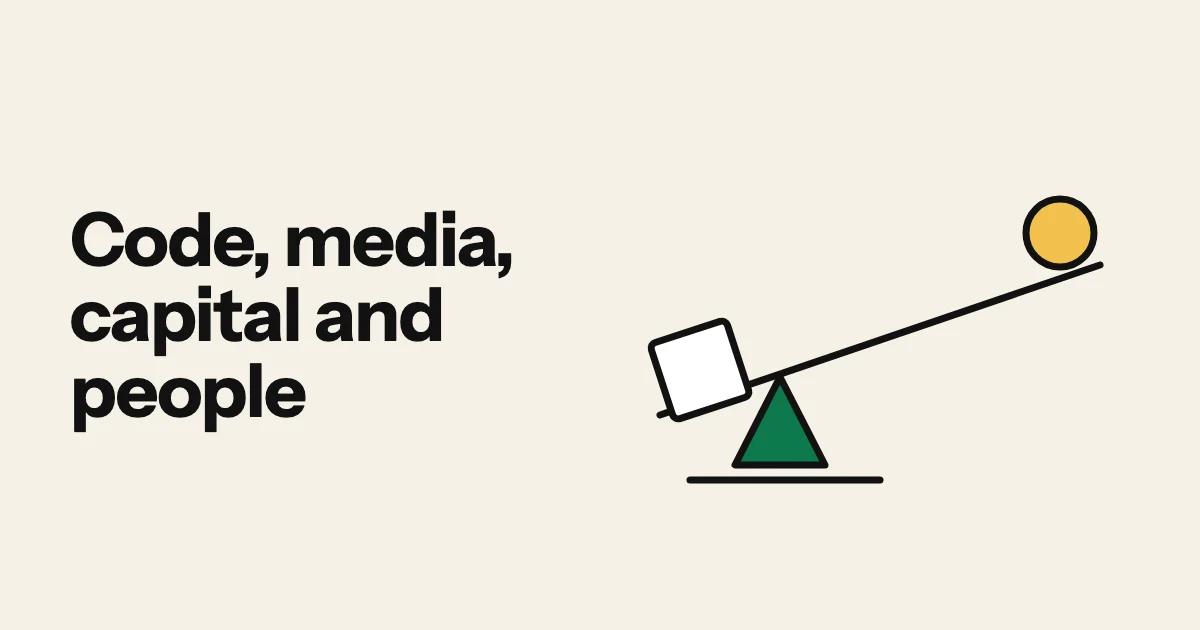
A lever lets a small push move a heavy weight. In business, leverage lets one decision move a big result. Without it, your income tracks your hours. With it, your income tracks your judgment.
Naval Ravikant built his widely shared essay How to Get Rich around this idea. He opened with Archimedes, then wrote:
“Fortunes require leverage. Business leverage comes from capital, people and products with no marginal costs of replication.”Naval Ravikant, How to Get Rich
“No marginal cost of replication” is a fancy way of saying the next copy is free. A song, an app and an article cost nearly nothing to serve to one more person.
Paul Graham made the same point in 2004, from a different angle.
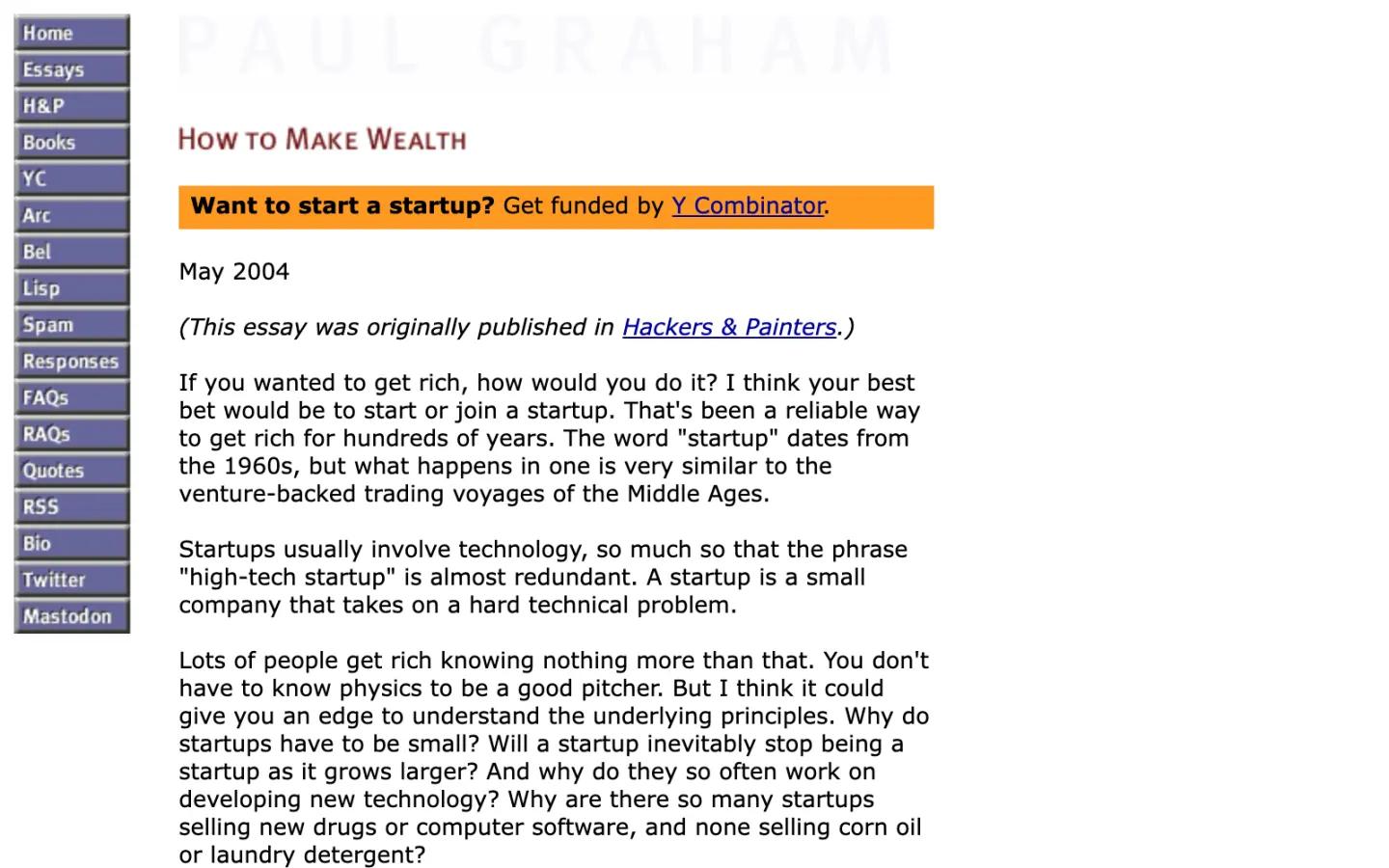
“To get rich you need to get yourself in a situation with two things, measurement and leverage.”Paul Graham, How to Make Wealth
What are the four types of leverage?
| Type | Needs permission? | How it multiplies you | First step |
|---|---|---|---|
| People | Yes | Others do work you direct | Hire one contractor for one task |
| Capital | Yes | Money does work you direct | Reinvest profit before raising money |
| Code | No | Software does work while you sleep | Automate one task you repeat weekly |
| Media | No | Content reaches people while you sleep | Publish one useful piece a week |
People
The oldest lever. A manager with 100 people is making decisions that 100 people carry out. Naval's point is that someone has to choose to follow you. That takes credibility you build over time.
Capital
Money that works for you: inventory, ads, equipment, a whole company. It also needs permission. A lender or investor has to trust you with it, or you have to earn it first.
Code and media
The new levers. Nobody can stop you from writing software, filming a video or publishing a newsletter. Naval calls these “permissionless,” and calls products with no marginal cost of replication the most important form of leverage.
Why are code and media called permissionless leverage?
Because the only gatekeeper is you. You don't need a boss, a bank or a hiring budget. You need skill and the willingness to ship.
The results can be extreme. Instagram had 13 employees when Facebook agreed to buy it for $1 billion in 2012. WhatsApp had about 55 when Facebook agreed to buy it for $19 billion in 2014. A few dozen people served hundreds of millions of users. That's code leverage.
Media works the same way. A useful essay or video keeps finding readers for years. It also builds the credibility that later wins over people and capital.
How do you get leverage when you have none?
Climb the ladder in order. Each rung pays for the next.
- Sell your time first. Get good at something paid. Naval puts it bluntly: you won't get rich renting out your time. But renting it out funds the start.
- Package what you know into media. Write down how you solve the problem. Publish it. Now it works without you.
- Turn repeat work into a product. A template, a tool, a course or a physical product. See how to make your first $10k online.
- Add people and capital last. Once a product sells, hiring and spending multiply something that already works.
This is also why a dull business with good margins can beat a flashy one. Leverage on a working machine compounds. Read why boring businesses make millionaires for examples.
When does leverage backfire?
Leverage multiplies whatever you feed it. Good judgment becomes a fortune. Bad judgment becomes a bigger mistake, faster.
- Debt is the sharpest edge. Borrowed money can wipe out an owner when sales dip. Use it only on something already proven.
- Hiring too early turns a small problem into a payroll problem.
- Media without substance spreads a bad reputation as fast as a good one.
Naval's fix is to play long-term games with long-term people. In his words, “all returns in life, whether in wealth, relationships, or knowledge come from compound interest.”
Use it this week
- List every task you did last week. Mark each one: people, capital, code, media, or none.
- Pick the task you repeat most and automate it with a tool you already pay for.
- Write one public post that answers a question customers ask you often.
- Set a rule: no debt or hires until a product has paying customers.
Get the next essay in your inbox
One essay on building wealth through ownership and leverage, plus one thing to try that week. Free.
Frequently asked questions
What is the best type of leverage for beginners?
Media and code, because they need no one's permission and little money. Writing about what you know, or using simple software to sell a product, lets you start this week.
What does permissionless leverage mean?
It's leverage you can create without anyone agreeing to give it to you. People must choose to work for you and investors must choose to fund you. Code and media only need you to build and publish.
Is debt good leverage?
Debt is capital leverage, and it cuts both ways. It can speed up something that already works, and it can ruin an owner when sales fall. This is general education, not financial advice.
Do I need to learn to code to use code leverage?
No. Store platforms, payment links and page builders let you use software other people wrote. Learning some code helps, but it isn't the entry fee.
Sources
- Naval Ravikant, How to Get Rich (nav.al)
- Paul Graham, How to Make Wealth (2004)
- Instagram acquisition by Facebook, 2012 (Wikipedia)
- WhatsApp acquisition by Facebook, 2014 (Wikipedia)
This essay is general education, not financial, legal or tax advice. Examples describe public, documented stories and are not promises of any result.